- 14 Posts
- 86 Comments


 1·22 days ago
I don’t know how it goes in the US, but in Finland the concept of lex praevia is set in the Finnish constitution.
Section 8 Principle of legality in criminal law No one shall be held guilty of a criminal offence or be sentenced to a punishment on account of an act that did not constitute a criminal offence under law at the time when it was committed. The punishment imposed for an offence shall not be more severe than that provided by law at the time of commission of the offence.
While the Finnish constitution is not set in stone, and can indeed be amended via a supermajority, there’s practically no government that would actually allow that kind of change to legislation. It’s obvious to anyone what breaking said principle would mean and strive for, and doing so would require at least four different parties to agree.
Well, they can create a law to properly fine such things in the future. If current law doesn’t allow imposing a proper fine, it’s not possible to amend in a way that allows fining after that.
At least in Finland you can only get punished according to the law that was in place when you did the act. Not any laws that were passed later. AFAIK the same is true in the US as well.
Well, Finnish forests are heavily forested and the cut down area was likely farmed/planted as well. They wouldn’t have managed to purchase the land for this purpose if there were actual old growth trees there, only few such places remain.
The environment around the forest matters more, e.g. rivers, ditches, swamps and so on. Most forests here are cut every 40-90 years and replanted after cutting.
The main issue here has less to do with the forest being felled, and more to do with the incorrect management of things like wastewater and possible endangered habitats. These things are mostly an issue in areas that are zoned. Outside the zoned areas most of Finnish forest is actively managed for forestry and is cut clear and replanted periodically over 40-90 years depending on latitude and type of forest.
Google would’ve gotten the rights to cut if they just bothered to wait a bit and fill in the required paperwork. In most of Finland you just tell the government you’re going to cut down a forest and get working. Instead they chose to expedite the process and are now being criticized for that purpose.
Typically forests aren’t clear-cut to that extent at a single time, and the top soil remains in place. The scale has a danger of rain washing off the soil and adding nutrients to the nearby river and thus the baltic sea as well. Those should’ve been properly managed and planning that management was the part they skipped. The forest would’ve become timber and other products in due time anyway (which it now won’t since it’s not legally cut).
 1·1 month ago
Which is also exactly what the CRT itself is – not all of the electrons pass through the mask. The difference is, that the actual CRT part has a longer field to accelerate the electrons, meaning the hit the mask or cathode with a higher energy leading to higher power x-ray photons. Modern tubes just had shielding so it wasn’t a concern, the older ones didn’t.
Technically x-rays are always generated when a particle accelerates. That’s why you can get them even from a high power cyclotron where the particle has a constant force applied on it. The actual CRT creates higher energy electrons and thus will generate more x-rays than the rectifier, it’s calculated simply from the voltage and the overall distance of acceleration. But if the TV had a tube rectifier it’s true that that would generate low power x-rays as well.
More specifically, the (low power) x-rays that are created when the electrons hit the screen and slow down are ionizing. The tube used in an x-ray machine is technically just a simple CRT without the mask, deflection coil, phosphorus and shielding, with the acceleration voltage cranked up a lot higher.
With your normal CRT the voltage isn’t high enough to be properly really though, and lack penetration power, so you can shield the tube quite easily. Which is also why it’s not actually harmful for you to sit in front of e.g. a CRT monitor.
 1·2 months ago
Thanks! I was pleasantly surprised with how well it turned out myself as well.
That’s an interesting piece of trivia. IIRC this nook is in the ladies common chamber, meaning light was required for chores that were common at the time (embroidery, knitting etc.). The best corner rooms in terms of getting light for as long as possible were usually reserved for scribes though, the scribes chamber was in the southwestern corner which is well lit for most of the day. Especially important in Finland with the short days in winter.
It’s difficult to realize how few real solutions we had for artificial lighting back in the day. Even candles were a luxury just a couple hundred years ago, and required constant attention to trim the wicks. Oil lamps were smelly, beeswax and tallow melted too easily and availability was limited. The common folk here in Finland used small wooden shingles for lighting, which burned out relatively quickly and created a fire hazard. It also smoked a lot, and you had to use a bucket to catch the hot embers that dropped off as it burned.
Also wrote it in the text on the post, but it’s scanned from a negative with a cheap(-ish) dedicated film scanner, and converted to positive digitally. I use NegPy which very closely mimicks the workflow of RA-4 printing (color fotosensitive paper used for printing photos in an analog minilab) in terms of how it calculates contrast, color balance etc.
I prefer the edit, the original feels too muted and cold. Maybe due to the white balance of the original scan? Although I do feel like the edit could do with a little bit more aggressive a black point, which the original achieves better.
Otherwise love the composition and the dominance of the blossoms. A great shot!
 16·3 months ago
If AI continues to be treated as transformative work, there should also be a valid case to kill licensing requirements for sampling music. After all, there you’re literally using small clips of someone’s music or similar to make undeniably new art.
The gif? That’s from terminator 2, not transformers, and is an incredibly well-executed effect for the time. It’s also missing the part where the actual effect happens.

Yep, the closest I can get with my own oven is 300 celsius with a pizza stone. At that point the heating elements are on pretty much constantly. It leads to a relatively good crust, but still isn’t as good as a proper pizza oven. I’ve seen some normal electric ovens that go up to 350 here, which could be enough to make up the difference.
The oven is also clearly not meant to be used like this on the daily. Parts of the oven exterior get to around 200 degress celsius when baking multiple pizzas.
Well, let’s give torpedoes to the orcas then.
 27·5 months ago
And by some miracle, I wouldn’t be surprised if the Panzer II felt more spacious inside. It’s baffling how cramped modern SUVs and especially crossovers are compared to their external size.
Our relatively small VW ID.3 is more spacious inside than most small-to-mid crossovers in Europe (e.g. Renault Kadjar/Nissan Qashqai, Volvo XC40 etc.). It’s still a lot smaller in external dimensions, and actually fits to parking spots.
Executive dysfunction train cafeteria meatballs
True, the responsibility for safe lane change lays on the driver who is changing lanes. However, any sensible country also prohibits obstruction of a lane change, i.e. you can get fined if you don’t hold enough distance to the driver in front of you to allow merging, don’t make room for the person with the signal on in reasonable time or if you deliberately close the gap so the other person can’t change lanes.
That kind of cooperation is mandatory for good traffic flow and properly made laws try to ensure that. Turning signal should result in people noticing you, and letting you safely switch lanes. Too often people get into some vigilante-mode because they see the other driver skipping in line or something similar.
Merging is another story. Merging traffic should explicitly yield to all traffic already on the highway, similarly to how it works in a roundabout. This prevents people merging on a highway that’s over its capacity, so the traffic clears quicker. It means that traffic should queue on the ramp until it’s safe to merge, indefinitely if necessary. Mathematically it makes sense, but goes against intuition.
Some municipalities have tried out metered entry on highways, that block turning onto the on-ramp altogether if the level of congestion is too high. Some trials have already ended due to the perceived injustice as well, as people already on the highway are typically from out of the city, and thus preventing those living closer from merging onto it. Personally I think if you’re close enough to complain about that you should be in public transit range of the population center, and complaining more about the lack of alternatives to driving.
Good point with the barrel, truth is probably somewhere between the barrel and a can. After all, there’s also pönttö, both vessan- and linnun-, which again are on the smaller side. I kinda love how much nuance and double meanings there are in especially the spoken language.
True meaning can only be grasped with enough exposure.
Didn’t we also have some Vickers six-tonners at the start? Next to useless by then but probably could penetrate at least a BT-5.
Edit: now that I think of it, a canister probably fits quite well between the sizes of can and barrel. But to me it would then be a closed container, which a pönttö doesn’t necessarily have to be.

They’re an interesting thing to say the least. Finland had a lot of wood gas generators in use during WWII as what limited petrol we had went towards the war effort. Other substitute fuels were used a lot as well, e.g. pine turpentine which we had a lot of as it’s a side product of refining wood into pulp.
It’s a relatively efficient system, and burns quite cleanly in the engine (as soot and other contaminants are filtered out by the generator). Though they’re quite dangerous, since wood gas is mainly pure carbon monoxide. The amounts they produce are so high that leaks or topping up the generator can cause carbon monoxide poisoning even when outside. In Finnish we actually call the generator häkäpönttö, which in English would be a carbon monoxide can (häkä colloquial Finnish for carbon monoxide, pönttö a colloquial Finnish word meaning a can, container, carton or someone dumb in a usually non-derogatory way – closest equivalent in English would be dummy).




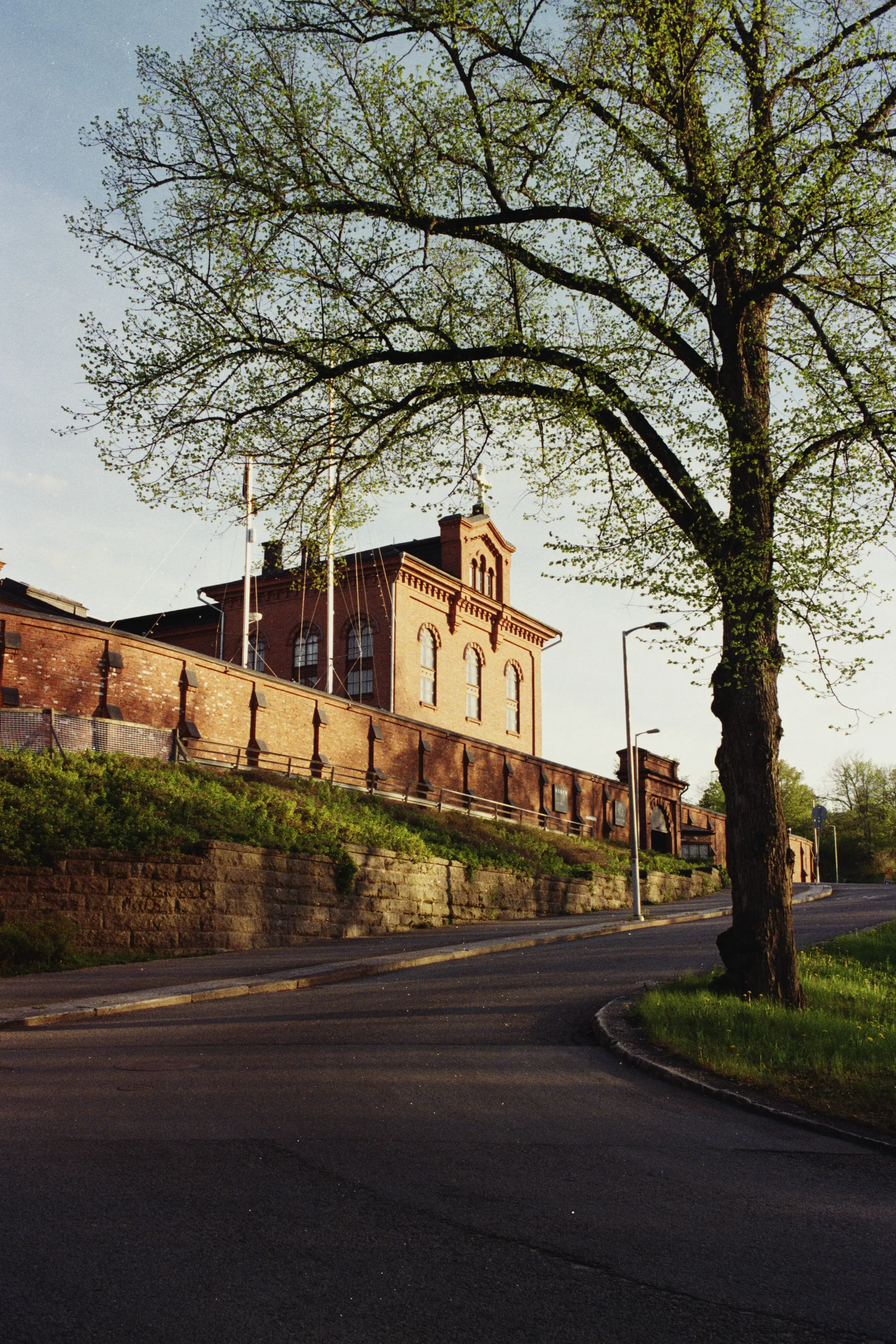


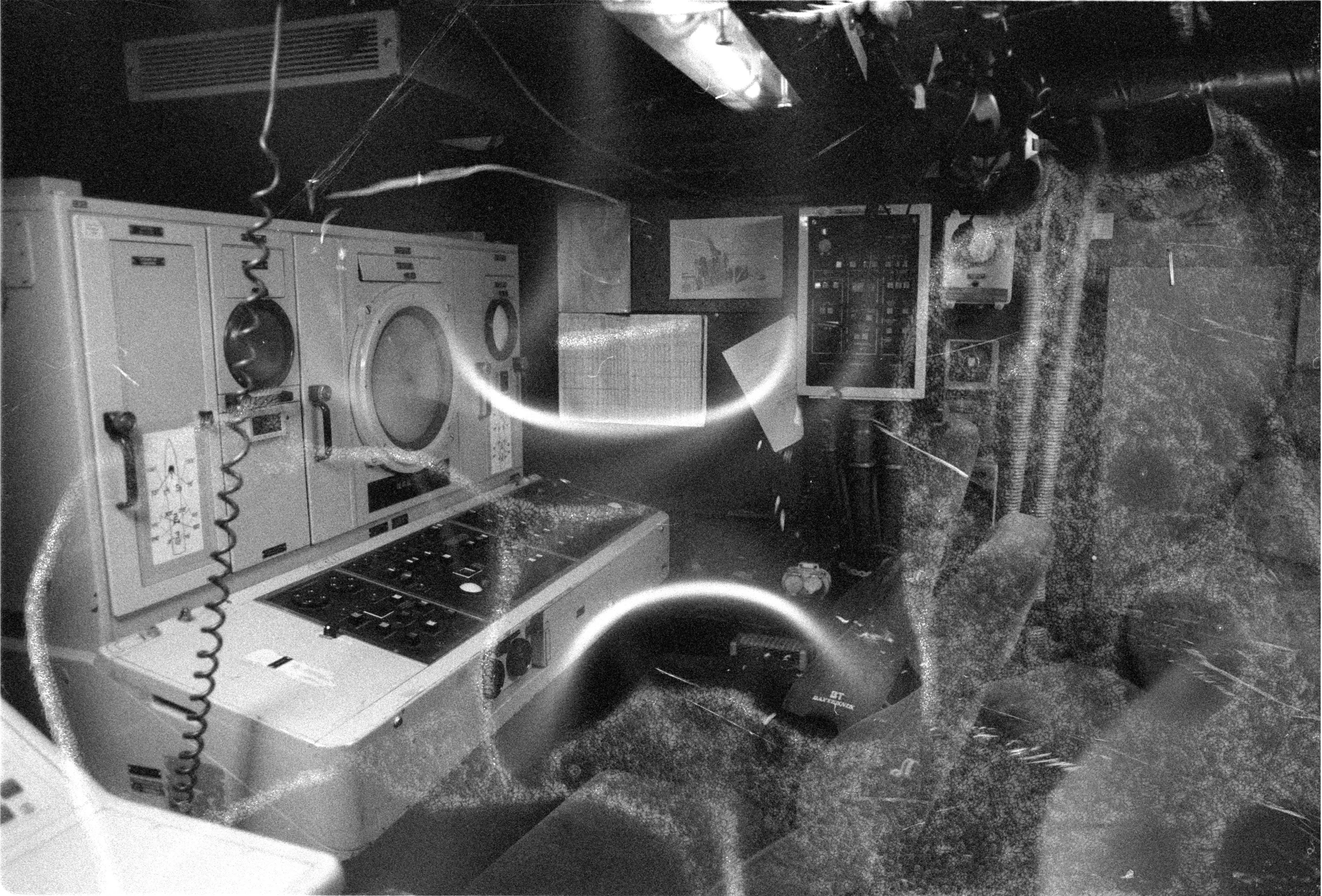


Definitely not maliciously, but from a sympathetic standpoint. The community discourages political statements, but my thinking behind this is mainly one advocating for proper financial support and helpful social policies. After all, the same social policies that reduce the amount of public begging in Finland (my home country) are the same policies that prevent violent crime from happening as well.
Unfortunately our current government seems to want to be reminded of this the hard way, by budget cuts in financial support. And that is bound to lead to more violent crime as well.