• 11 Posts
  • 20 Comments
Joined 3 years ago
cake
Cake day: June 26th, 2023

help-circle

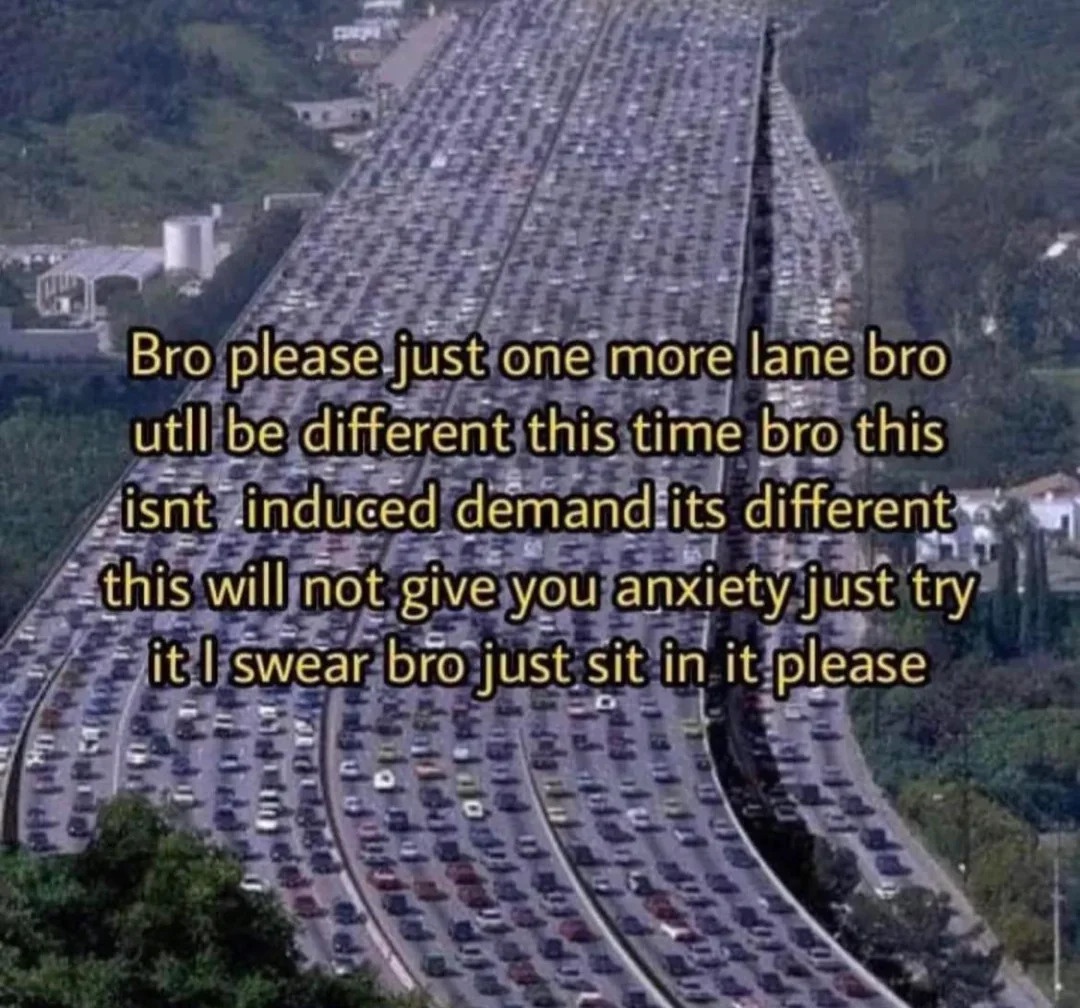
  • Also, I think they just described a normal day in the US. Cars can only exist because governments massively subsidize them. The highway system was a massive project that a lot of people didn’t want. Chaos and death is the system. People don’t have to run away when they hit a cyclist, because drivers are often not even held liable. There being no consequences for killing people on bicycles is exactly the system we have now.

    Edit: Cars kill at least 120 people every single day, and maim or permanently disable many more. HOW IS THAT NOT CHAOS AND DEATH?






  • I think one of the big problems with every methodology, and every attempt to come up with a unified vulnerability or threat ontology, is that a security problem can also be “whatever the user doesn’t like.” These types of things always run into problems caused by the mixing of syntactic and semantic threats, without attempting to distinguish between the two.

    Then every threat library derived from these doomed ontologies end up either over complex or insufficiently complex to represent the problem set. At least that’s my take. I could be wrong.

    Adding in the VSM actually makes things a lot easier, because all your threats will align through viability. So then a threat can be more formally defined as “Any behavior systemic of the system under test that threatens the viability of the parent system, given that the behavior can be intentionally invoked.”

    The VSM also just happens to be a threat model, though it never seems to be described as such.


  • I’m reading “Brain of the Firm” and working on a threat modeling methodology, actually. I worked on one that’s been used a bit internally at work. It allowed us to threat model before design. That provided a framework to guide design and support implementation, rather than just checking those things when they were done.

    It has some similarities to Trike (at least as I understand it). That probably shouldn’t be surprising since I worked for Mike Eddington for a while in the 2010’s. It starts with something very similar to the trike requirements model, but isn’t restricted to CRUD. It also added an additional “constraint” field which was free text. It was really powerful, but could be hard to use. One folks learned it, they were able to get great results. The best thing is that TPMs and product owners, not security folks, owned the first step. By including them in the process, the whole product team started to think in a more adversarial way. But it was always missing some stuff. The hardest thing is figuring out what level of abstraction to model. It also never had a good threat library.

    Since digging into the Beer’s Viable System Model, I think I’ve figured out a lot of additional things. There are still some gaps. All of this was happening before LLMs, and a lot of the manual work was mutating triplets. The whole thing was designed with formal language in mind (some folks suggested ACE). With LLMs the text manipulation is pretty easy, and formal language may not be necessary. Integrating VSM can clarify what level to model, while still providing recursion to model at a deeper level.

    I’m also thinking about integrating the OODA loop. The whole idea of threat model then test has always been a problem for me. There’s a natural interplay between your observations, how they fit in to what you know (orientation), which things you then prioritize to test (decide), and how you formulate your action into a hypothesis.


  • It’s gas lighting, like a lot of the posts in response. Being socialized as a man sucks. You’re both measured by your partners and expected to not need anyone or express any emotions. So basically you get shit like you described where men end up having no self esteem so they are desperate for women to validate them but they also feel smothered and confused by the completely normal and human need for emotional connection that woman have been allowed to keep.

    Patriarchy is a machine that turns normal humans in to abusers, and it takes a lot of work to deprogram from this… Especially when it’s constantly being reinforced all around you (like a lot of the guys who responded).


  • People used to make poppy tonic as a pain killer, and poppies are easy to grow and process. Willow bark is a precursor to aspirin, but dosage can be really hard to figure out because there’s so much variance in plant strength. Willow is especially dangerous because the LD50 of aspirin is one of the lowest (the lowest?) of modern medicines.

    Psychedelics are excellent for treating depression, addiction, and PTSD. Marijuana has been claimed to fix everything but realistically it’s a good sleep aid and can also help treat PTSD. Both of these are pretty easy to grow and may be legal depending on where you’re at and if you have a prescription.

    Ginger and marijuana both are good for treating nausea, and you should be able to grow ginger indoors in colder climates too.

    St John’s Wart is good for depression. Valerian is a sleep aid. Kava is also a sleep aid and good for anxiety.

    There are a lot of indigenous medicines derived from plants (many of which were processed or synthesized in to the drugs you can be prescribed today). This would be a good place to start (while being a bit critical and realizing that you should also research efficacy outside of folk wisdom).

    Just thinking about this in order of importance, what we really need are antibiotics. This is a lot harder to make. I know penicillin is just mold, but it’s heavily refined and only good for a short time.

    You can do a lot without a lab, but if you want to really get serious you need to make sure you’re working with folks who have chemistry degrees because it can get really complicated and really dangerous really quickly.