

3·
4 days agoSuppose there’s any sort of difficulty, and wheat price on the global market rises 20%. People in affluent places/positions will grumble and pay 20% more for bread or pasta. Poor people will grumble and eat 20% less.
Suppose there’s any sort of difficulty, and wheat price on the global market rises 20%. People in affluent places/positions will grumble and pay 20% more for bread or pasta. Poor people will grumble and eat 20% less.
Lots of weird things happened in Soviet Russia… I don’t know about heliobiology, but https://en.wikipedia.org/wiki/Lysenkoism was discredited pretty thoroughly. That’s (and the anti-vac anti-mask clown performance in the USA) is what you get when politicians get to decide science.
In Icecast you usually have a “station” (mountpoint) sourced by a source client like IceS and streamed by Icecast to a large amount of listeners. This implies that all listeners of that mountpoint get the same stream, so an individual listener can’t pause the stream or add different tracks without affecting all other users.

You might want to check out pass - the standard Unix password manager
Surely a custom vibe-coded mess of a web frontend for ImageMagick (it allows uploading a whole lot of scanned images, then presents a comfy web UI which allows choosing particular transformations - posterize to bilevel, trim, straighten, deskew, scale-to-page-size-and-add-edges). It runs in an ancient discarded-and-salvaged laptop.
I also use the same laptop as:
I also run a periodic HLS video broadcast (my home internet connection should survive something like 40 simultaneous watchers, I should figure out how to distribute it efficiently to other hosts). It’s too heavy for the ancient laptop, but (as it turns out, I measured yesterday), a NAS with a 4-core Intel N100 CPU just barely manages. I might switch to it, it’s probably more power efficient than the current desktop workstation.
Right you are. Still much cheaper than a laptop, let alone a server.
When logged in locally, I use btop to see an overview of what’s happening.
Other than that, I have relevant Prometheus exporters in every machine (node exporter in all machines, specific exporters by the workload), hooked up over Wireguard to my monitoring solution offsite.
The phone I actually carry around has a ntfy client talking to ntfy server on the aforementioned monitoring solution, so I get buzzes when something goes down.
Btw, does anybody happen to know where I could get a pre-cooked comprehensive alert system for my nodes? Surely many people have already written all these rules:
So much this! I know the abilities and quirks of my software and hardware, and I get excellent use out of discarded junk.
ntfy, self-hosted offsite on an old phone, it takes around 300mA, ie.less than a watt.
ntfy app on my phone.
Wireguard between them.
Yep, and it works surprisingly well. Of course you’ll need to run the LLM and the app both in a container to discourage accessing your SSH keys and such.
I found your Pimaps to be fabulous.
Haters gonna hate, there’s no help for it.
AI is a tool. Slop happens, but it doesn’t necessarily need to happen. I imagine there were many misguided, unnecessary, and just plain wrong trenches dug just after invention of the backhoe.
Go on and do even greater stuff.
Yep, looks like it’s rotting. Then again, at my age, so do I.
Yep, can happen. Do we know if this tends to happen more often with lispy (than curlybracy) languages?
Citation needed.
I asked a LLM to start a stdio REPL, write code and then copy the code into the REPL. It closely mirrors actual Lisp development process - you write a couple of lines, eval it, see why it didn’t work, and repeat. Here’s what it came up with:
$ : > /tmp/lisptest-repl.commands; : > /tmp/lisptest-repl.log; (tail -n +1 -f /tmp/lisptest-repl.commands | sbcl --noinform > /tmp/lisptest-repl.log 2>&1) & echo $! > /tmp/lisptest-repl.pid; sleep 1; printf '(require :asdf)\n(asdf:load-asd
#P"/home/user/lisptest/lisptest.asd")\n(asdf:load-system "lisptest")\n' >> /tmp/lisptest-repl.commands; sleep 2; tail -40 /tmp/lisptest-repl.log (timeout 10s)

* ("ASDF" "asdf" "UIOP" "uiop")
* #<ASDF/FIND-SYSTEM:DEFINE-OP >
#<ASDF/PLAN:SEQUENTIAL-PLAN {1204C49563}>
* T
*

Took 3.1s
Feeding a single ) into the REPL. The LLM later recovered it by sending the abort command to the debugger.
$ printf ')\n' >> /tmp/lima-repl.commands; sleep 1; tail -25 /tmp/lima-repl.log (timeout 10s)

* #<ASDF/FIND-SYSTEM:DEFINE-OP >
#<ASDF/PLAN:SEQUENTIAL-PLAN {1204C49563}>
* T
* #<SB-THREAD:THREAD tid=151 "lima-echo" RUNNING {1203EB14E3}>
* Echo server listening on 127.0.0.1:5555
T
* NIL
* #<SB-THREAD:THREAD tid=0 "lima-echo" RUNNING {1201C0DDC3}>
* Echo server listening on 127.0.0.1:5555
T
*
debugger invoked on a SB-INT:SIMPLE-READER-ERROR in thread
#<THREAD tid=142 "main thread" RUNNING {12003D8003}>:
  unmatched close parenthesis

    Stream: #<SYNONYM-STREAM :SYMBOL SB-SYS:*STDIN* {12014C9E73}>

Type HELP for debugger help, or (SB-EXT:EXIT) to exit from SBCL.

restarts (invokable by number or by possibly-abbreviated name):
  0: [CONTINUE] Ignore it
  1: [ABORT   ] Exit debugger, returning to top level.

(SB-IMPL::READ-RIGHT-PAREN #<SYNONYM-STREAM :SYMBOL SB-SYS:*STDIN* {12014C9E73}> #<unused argument>)
0]

Took 1.0s
This thing activates a new function definition. Next time it’s called, the new one gets executed.
printf '(load #P"/home/user/lisptest/src/server.lisp")\n' >> /tmp/lisptest-repl.commands
Logitech MX Master 3. I’ve had it for many years. Happy, except the scroll wheel is stiff and hard to click (remap the SmartShift to middle button with Solaar).
Does either Bluetooth or dongle.
The battery lasts for months (I’ven’t measured, but it feels like I recharge it a couple of times per year. When it feels peckish, it lights a LED, at which point I turn it into a wired mouse for the night (it eats USB-C).
Input lag? If you want input lag, run a Teams call. I’m not a FPS gamer, so I wouldn’t know, but I don’t notice any.
Migrating the rest of my boxen to flakes rn. Kindly keep it quieter out there, folks, you’re making it hard to hear the HDD to see if the nixos-rebuild actually uses the cache.
So am I. Add a linter.

Occasionally, when there’s enough gunk for it to be unsightly. What does ETA mean?

Don’t worry, they stayed buried alive only for a very short time.


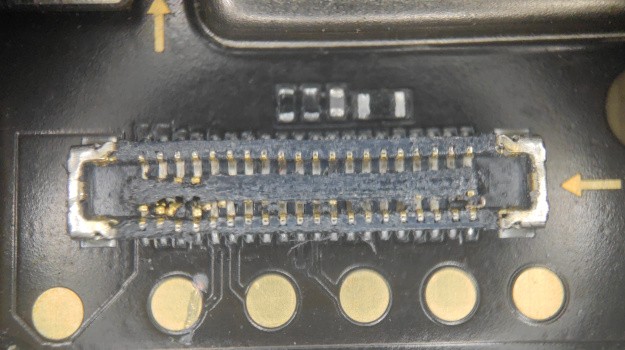


Hmmm, it seems more strikes are needed.